The brief
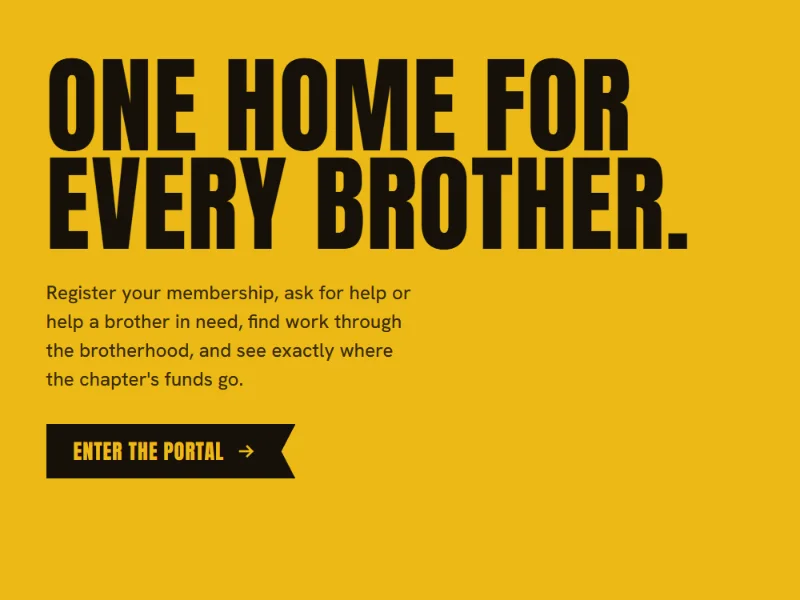
The Legazpi City Triskelion Alumni Organization (LECITAO) is the Tau Gamma Phi alumni chapter in Legazpi City, dating from 1994. It needed one place for its members: their membership record, mutual aid, contributions, job leads and chapter events, with a fund that every member can see. Success meant three things: every peso received or released is visible, every aid request is tracked until it's released, and older members can use it without help.
What the portal does
The public site and the portal serve three kinds of people, each with their own sign-in:
- Members keep their record up to date, enter contribution codes, request mutual aid, post and find jobs, follow chapter events, and see where the fund goes.
- Collectors, brothers chosen to receive contributions in person, issue a one-time code for each amount they receive.
- Officers verify new members, review and release aid, cancel codes, check job posts, post events, and see a log of every action.
Anyone can visit the public pages: the chapter's job vacancies, its events, and the fund totals. Brothers who aren't members yet can register, and the chapter secretary verifies each registration before the account is active.
Contributions without handling money
A payment gateway would have added fees, paperwork and a new way for things to go wrong, and members already hand contributions to a collector at meetings. So the portal records money instead of taking it:
- The collector enters the amount, and the portal shows a 10-character code once, large and easy to read.
- The member enters the code in the portal, and the amount posts to their record and to the public ledger in one step.
- Each code works once. A second attempt is refused, even if two people try at the same moment.
- Unused codes expire after 30 days, and an officer or the collector who issued one can cancel it.
- Only a fingerprint of each code is stored, so nobody can read working codes out of the database.
A ledger every member can check
Every amount received and every aid released goes on one ledger, and members can see all of it. The ledger shows amounts, never names: transparency about the fund without exposing who gave what. The balance is always worked out from the entries themselves, never typed in, so it can't drift from the record.
Mutual aid, from request to release
A brother can request help for medical bills, bereavement, a calamity or other hardship, say who it's for, and attach documents such as receipts or certificates. Then:
- Officers review the request and approve or decline it, with a reason the member can see.
- Only an approved request can be released, and releasing it posts the amount to the ledger automatically.
- Documents are stored privately. The portal checks what each file really is from its contents, not its name, before accepting it.
Built for older members
Many members are older and use the portal on phones and computers about equally. So nothing gets smaller to fit:
- Body text is at least 18px, and no text is smaller than 15px.
- Every button and link is at least 44px tall, the size Apple and the WCAG guidelines recommend for fingers.
- Text contrast is at least 7:1 (WCAG AAA) in both light and dark themes, and the theme follows the phone's own setting.
- Warm, direct wording and plain steps. Members are addressed as “brother”.
Accounts without email
Many members don't use email, so accounts work with a username and password only. When someone forgets their password, an officer issues a one-time reset code instead of an email link. Accounts lock for a while after repeated wrong passwords, and passwords are stored with a slow, salted hash, never as text.
Privacy and testing
Member records fall under the Data Privacy Act of 2012 (RA 10173), so members agree to the privacy notice when they register, and it stays one tap away in the footer. Every officer action is recorded in an audit log.
Behind it are 186 automated tests that run against a real database with the same structure as the live one, so the money and aid rules are checked exactly as they run in production. A second kind of testing deliberately breaks the code in small ways and fails the build unless the tests catch at least 80% of the breaks.
Frequently asked questions
What is LECITAO?
LECITAO is the Legazpi City Triskelion Alumni Organization, the Tau Gamma Phi alumni chapter in Legazpi City, dating from 1994. lecitaotrust.com is its public website and member portal, built by Bytebento.
Can members pay their contributions online?
No, and that's on purpose. Contributions are handed in person to a collector, who gives the member a one-time code for the amount. The member enters the code in the portal, and it posts to their record and to the public ledger. The site never handles money.
Does the public ledger show who contributed?
No. The ledger shows every amount received and released, but never member names. Each member sees their own contributions after signing in.
Can Bytebento build a portal like this for another organization?
Yes. Alumni groups, associations, cooperatives and clubs often need the same things: a member registry, dues or contributions, assistance requests and a transparent record of the fund. We build them around how the organization already works.